
Quick Answer
Counter-drone teams train against fiber-optic FPV drones for one main reason. These drones do not send a radio signal that jammers can block. So the usual jamming defense does not work on them. Training instead focuses on other tools. These include sight, sound and radar. Teams also run realistic, controlled drills to test their skills.
Why This Threat Model Is Different
Most counter-drone systems were built around one idea. Find the radio signal a drone uses for control or video. Then jam or take over that frequency. This works well against a normal FPV or camera drone. Those drones rely on radio for both links.
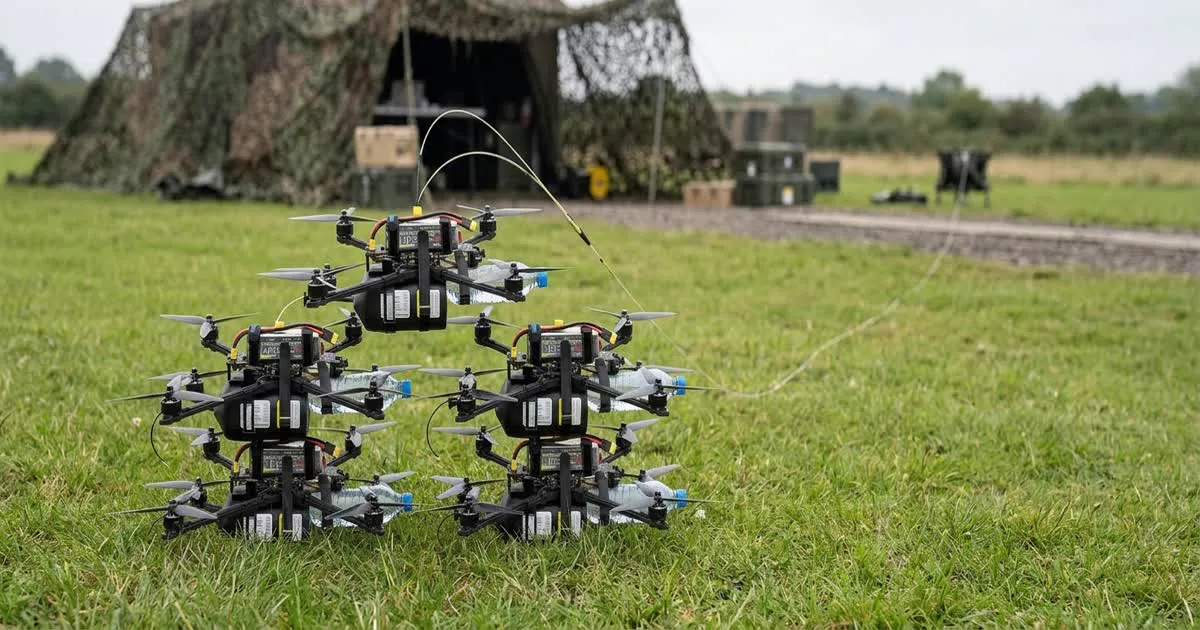
A fiber-optic drone breaks this idea. Our guide on how fiber-optic FPV drones work explains the tech in full. Its control and video signal moves through a cable, not through the air. A system built only to find and jam radio has nothing to grab onto. There may be little or no radio signal on that main link at all.
This is why trainers need real fiber-optic drones in their programs. A team that has only faced radio-linked drones can build blind spots. They may not know these gaps exist until they meet a drone that does not act the way they expect.
What Detection Methods Still Work
Radio jamming loses most of its power against a fiber-linked drone. But other tools still work well. None of these depend on the drone's link type.
Sight still works. Cameras, human spotters and tracking tools can all see the drone. It does not matter what link the drone uses.
Sound still works too. A fiber-optic drone still needs real motors and props to fly. It makes noise much like any other small drone of the same size.
Radar looks for the shape and motion of an object in the sky. This also does not depend on the drone's link. Radar cares more about size, material and height.
The cable itself can help too. In some cases, the trailing fiber line is a visible clue. A normal radio-linked drone has no such cable.
The best lesson from most training programs is simple. Do not rely on one method alone. Layer several tools together instead.
Building a Layered Detection System
No single tool catches every drone in every setting. A camera can miss a small target against a busy background. A microphone can lose a quiet drone in loud surroundings. Radar can struggle with very small or very low targets. This is why real counter-drone teams build a layered system instead of trusting one sensor.
A layered system passes information between tools. Radar might spot a moving object first. A camera then zooms in to confirm what it is. A trained spotter listens for engine sound to add one more check. Each layer covers a gap the others leave open. Training time goes into learning how to read and combine these signals quickly, not just how to use each tool alone.
This layered thinking also carries into the classroom part of training. Instructors often walk trainees through past drone incidents. They explain which sensors caught the threat and which ones missed it. This case-based teaching helps trainees build good judgment, not just checklist habits, for the moment they face a real, unfamiliar drone in the field.
What Training Scenarios Typically Cover
Good training against fiber-optic threats focuses on a few core skills:
- Spotting a drone by sight and sound, without any radio detection tool.
- Tracking a small target in a busy space, like near buildings or trees.
- Running drills where jamming is taken off the table on purpose. This forces trainees to use other tools.
- Studying how a trailing cable changes a drone's flight path near objects.
Trained counter-drone groups run these drills under controlled conditions. They are not casual hobby exercises.
Safety Considerations in Training
Any drone training needs a real safety plan. A few points matter most for this kind of drill:
- The training airspace must be cleared and approved first.
- Any live gear used for tests must follow its own safety rules and local laws.
- Only trained staff should handle a fiber-optic drone. Cable handling during flight and landing carries its own risk.
- A debrief after each drill helps trainees link what they saw to what worked or failed.
Why This Stays a Specialized Field
Fiber-optic drone training sits in the professional counter-drone world. This means the military, security groups and research teams, not hobby pilots. The gear, airspace approval and safety oversight this work needs go far beyond normal FPV flying or filming.
For daily FPV flying and filming, this topic is useful mostly as background. It helps to know how drone tech and its countermeasures keep changing. Most pilots still rely on radio-based systems day to day, like the ones in our guide to FPV frequencies and channels.