Quick Answer
FPV costs range from a small, cheap tiny whoop setup for indoor flying, up to a serious freestyle or long-range rig with premium parts. Your total cost depends on drone size, video system, and how many spare parts and batteries you buy. The biggest hidden costs are crash repairs, extra batteries and a good charger, not the drone itself.
The Three Rough Budget Tiers
Instead of fixed prices, which change by region and retailer, it helps to think in tiers based on what you get.
Entry tier: A small, ready-to-fly drone, usually a tiny whoop, bundled with a basic radio and simple goggles. This is the cheapest way into FPV and the safest place to learn indoors.
Mid tier: A 3-inch or 5-inch bind-and-fly drone paired with a separate quality radio and a step up in goggles. This tier is where most hobby pilots settle once they move past basic indoor flying.
High tier: A custom-built 5-inch or 7-inch drone with premium motors, a digital video system, and high-end goggles. Long-range and cinelifter builds also sit in this tier, since they add extra electronics and larger frames.
Our guide on choosing your first FPV kit explains which tier makes sense for a true beginner.
What to Buy First
Do not spend your full budget on the drone alone. Spread it across these four things, in this order of importance:
- A simulator and a compatible radio. This is the single best value in FPV. Practicing on a simulator before you fly for real saves you from crashing an actual drone while learning basic control.
- A beginner-friendly drone. A small, cheap frame that survives crashes is far better than an expensive one for your first few months.
- Goggles that fit your budget, not your ego. Simple box-style goggles work fine for learning. Upgrade once you know FPV is a hobby you will stick with.
- Spare batteries. Two batteries barely get you started. Four or more let you actually practice for a full session without long breaks.
The Hidden Costs Beginners Miss
New pilots almost always underestimate these ongoing costs, which add up faster than the drone itself.
- Spare propellers. You will break props while learning. Buy several sets before your first flight, not after you crash.
- A proper charger. A slow, basic charger wastes your flying time and can be unsafe for larger batteries. A good charger is worth the extra cost.
- Repair parts. Motors, frame arms and flight controllers get damaged in crashes. Budget for replacements as an ongoing cost, not a one-time expense.
- Battery storage and safety gear. LiPo batteries need a fireproof bag or box for charging and storage. This is a small cost that protects a much bigger investment.
- Straps and connectors. Small items like battery straps and replacement connectors wear out and need regular replacing.
Where People Overspend
A few common mistakes push the cost of getting started much higher than it needs to be.
- Buying a race-tuned or freestyle-tuned drone as a first drone. These are twitchy and hard to learn on, which leads to more crashes and more repair costs.
- Buying premium goggles too early. A beginner cannot tell the difference in image quality yet, and a crash while still learning can damage an expensive headset.
- Skipping the simulator. This is the most expensive mistake. Every hour spent practicing on a simulator is an hour that does not cost you a broken propeller or motor.
- Buying one battery. A single battery gives you a few minutes of flight before you have to stop for a long recharge, which kills momentum for a new pilot.
Smart Ways to Save Money
You can get into FPV without cutting corners on safety by being smart about where the savings come from.
- Buy a ready-to-fly or bind-and-fly kit instead of sourcing every part yourself. Kits are almost always cheaper than buying parts individually as a beginner.
- Choose a durable frame material and design built for crashes, since replacement frames are one of the more common repair costs.
- Learn basic repairs yourself. Soldering and simple part swaps are not hard to learn and save real money over time.
- Join a local FPV community. Experienced pilots often have spare parts, advice on what to avoid, and sometimes used gear to sell at a fair price.
Building a Realistic Budget Plan
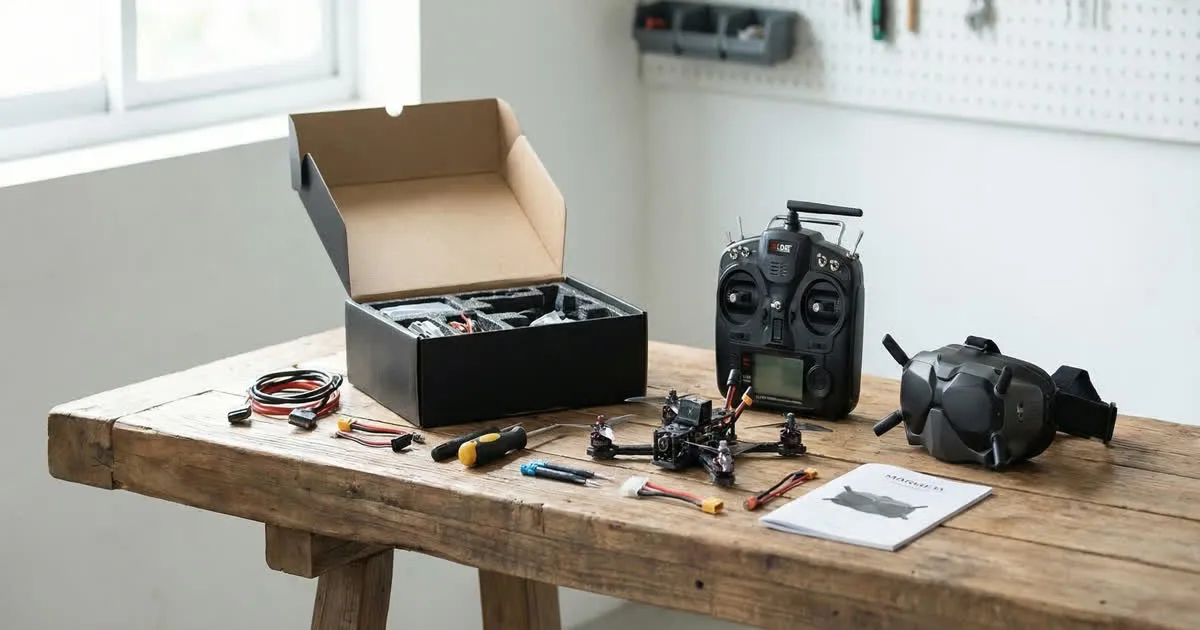
Rather than picking one number, plan your budget across a full first setup: the drone, radio, goggles, a simulator, at least four batteries, a charger, and a stock of spare propellers and small parts. Treat the drone as only part of the total, not the whole budget.
If you are unsure how much of your budget to put toward each item, our guide on FPV drone parts explained breaks down what each part does, which makes it easier to judge where spending more actually improves your flying experience.