Quick Answer
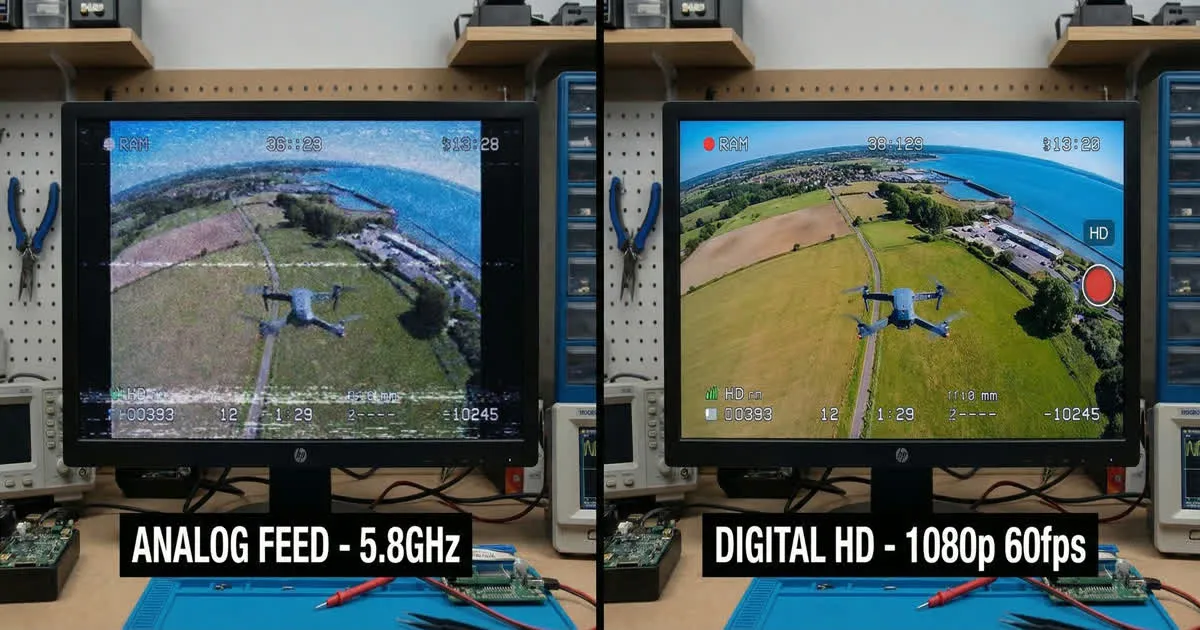
Analog FPV video is cheap, light and has almost no delay, but the picture is low resolution and gets noisy near the edge of range. Digital FPV gives you a sharp, clear picture much further into a weak signal, but it costs more, weighs more, and adds a small amount of delay. Pick analog for racing and low-budget builds. Pick digital for freestyle, cinematic flying and most filming work.
How Analog FPV Works
An analog video transmitter, or VTX, sends a raw video signal over the air, much like an old TV broadcast. Your goggles pick up that signal and show it right away. There is barely any delay between what the camera sees and what you see. This makes analog a strong choice for fast, close-range flying like racing, where a split second matters.
The picture itself is standard definition. It looks soft, and colors are not very accurate. As you fly further away, or if something blocks the signal, the picture gets noisy. You will see static lines and flickering before the signal drops out. Many pilots see this noise coming and treat it as a warning to fly back.
Analog gear is light and cheap. A basic analog VTX can weigh only a few grams, which matters a lot on tiny whoops and racing frames. It also uses less battery power than most digital systems.
How Digital FPV Works
Digital systems, such as the DJI O4, Walksnail Avatar and HDZero, capture video and compress it before sending it. The goggles then decode that signal and rebuild the picture. This process gives you a much sharper, high-definition image with better color and detail, even in low light.
The trade-off is processing time. Capturing, compressing, sending and decoding video all take time, so digital video always has more delay than analog. On modern systems this delay is small. Most pilots stop noticing it after a few flights.
Digital gear also weighs more, since the air unit, camera and antennas are heavier than analog parts. If you want to learn how one popular digital system handles setup and settings, read our DJI O4 Air Unit guide.
Range and Signal Behavior
This is where the two systems behave very differently. Analog video fades slowly. As you fly further, the picture gets grainier step by step, giving you a clear warning before you lose the signal completely.
Digital video tends to hold a clean picture for most of its range, then break up quickly once the link gets too weak. Some pilots call this a "cliff edge" instead of a slow fade. Good antenna choice and line of sight both help push that edge further away. Our Walksnail range guide covers the settings and habits that help you get the most range from a digital link.
Image Quality Compared
| Factor | Analog | Digital |
|---|---|---|
| Resolution | Standard definition | High definition |
| Delay | Very low | Low, but higher than analog |
| Low-light view | Weak | Much better |
| Behavior near range limit | Slow, gradual noise | Clean, then a fast drop |
| Typical weight | Very light | Heavier |
Cost and Weight
Analog remains the cheapest way into FPV. A full analog video setup, including camera, VTX and goggles, usually costs much less than a comparable digital system. This makes analog a sensible choice for beginners, for racers who crash often, and for tiny whoops where every gram counts.
Digital systems cost more up front, both for the goggles and the parts on the drone. They also draw more current from the battery, which can slightly reduce flight time. For freestyle and filming, most pilots feel the image quality is worth the extra cost and weight.
Which System Suits Which Style
- Racing: Analog is still common. The near-zero delay matters most when flying fast and close to gates.
- Freestyle: Digital has become the popular choice. The sharp picture helps you judge distance and gaps more clearly.
- Cinematic and filming work: Digital is the clear winner. Clients expect a clean, detailed image, and the DJI O4 and Walksnail systems both record high-quality onboard footage.
- Learning and tiny whoops: Analog is often the simpler, cheaper starting point. If you are choosing your first setup, our guide on FPV goggles explains how box goggles and digital goggles differ.
- Open-source and budget digital: OpenIPC is a lower-cost path into digital video. See our OpenIPC FPV guide for how it compares to DJI and Walksnail.
Making the Switch Later
Many pilots start on analog and move to digital once they know FPV is for them. The two systems are not compatible, so switching means new goggles and a new air unit or VTX. Some pilots keep one analog quad for racing or practice and a digital quad for filming and freestyle. Each system has real strengths in its own area.